Japanese Large-Scale Projects
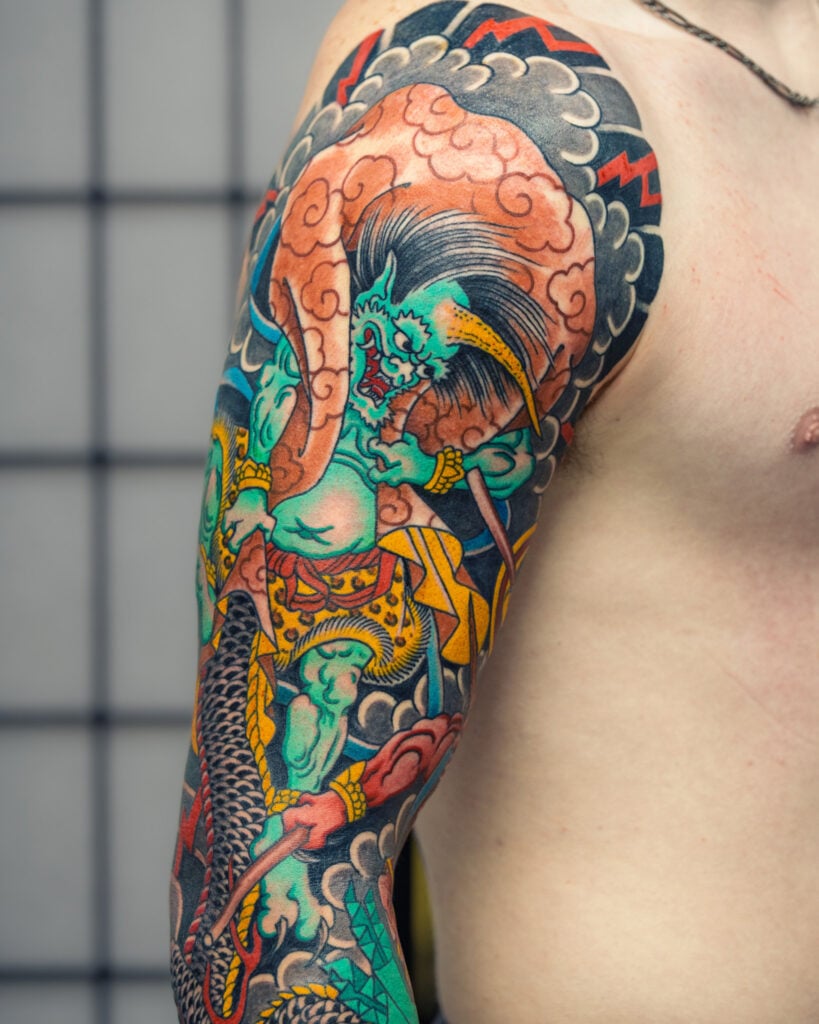
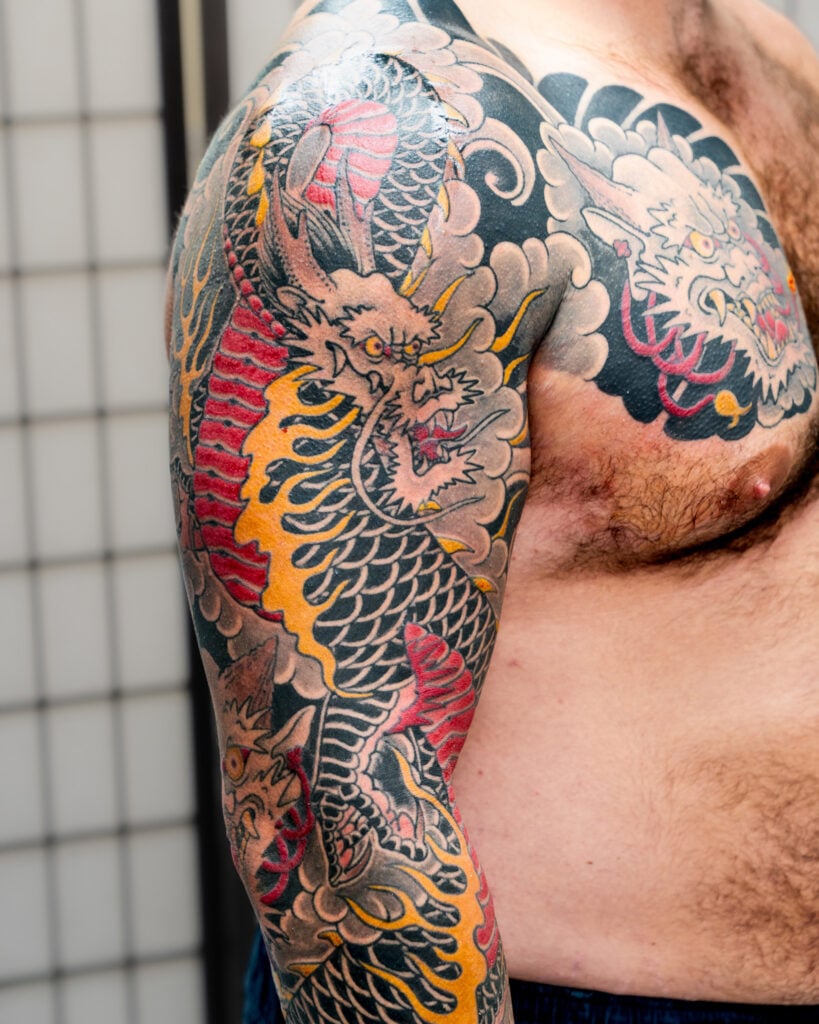
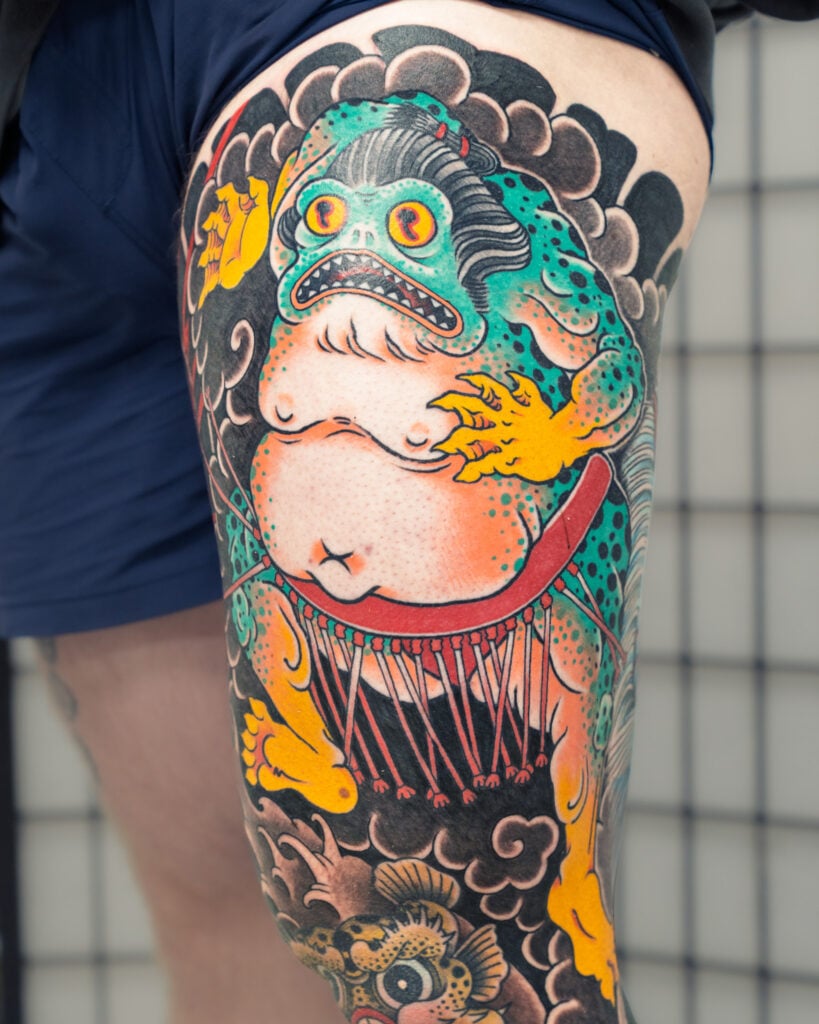
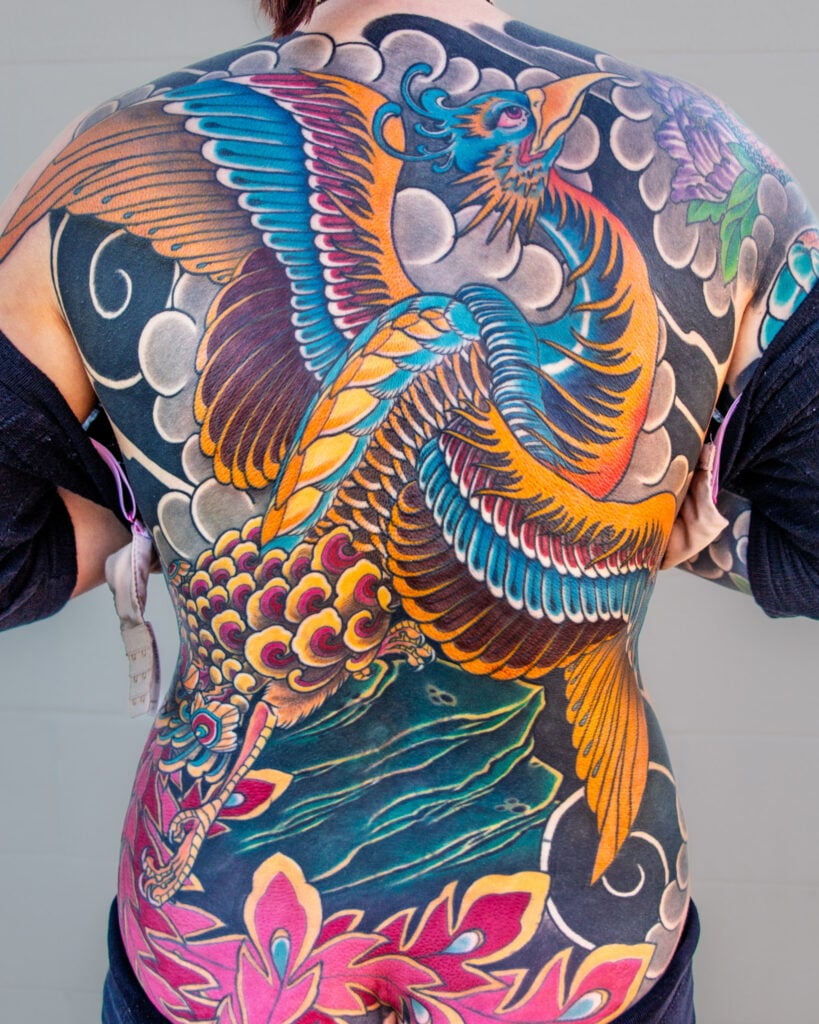
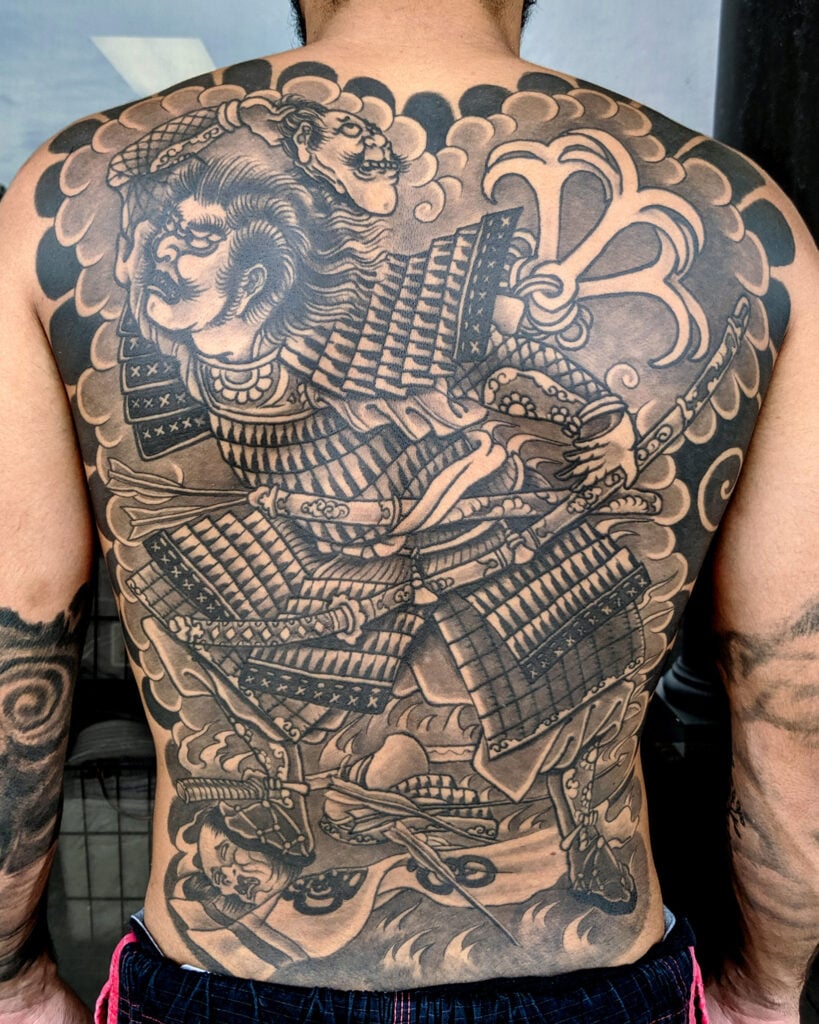
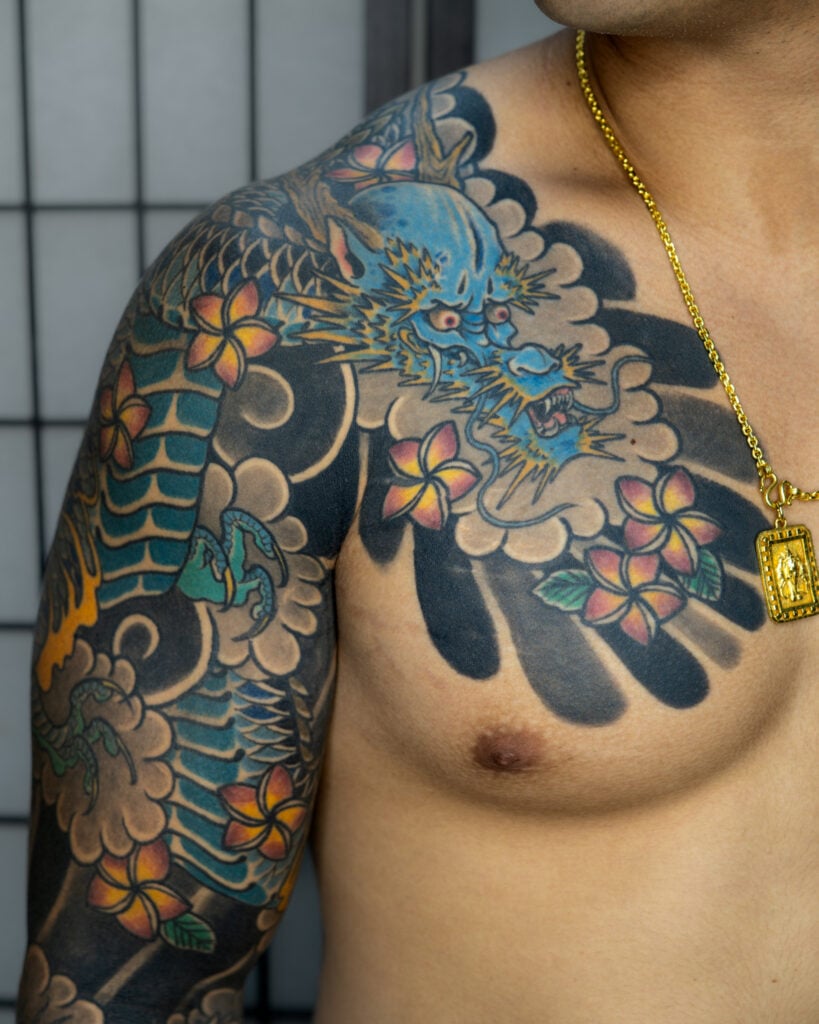
Multi-Session Japanese style tattoos including Back Pieces, Long Sleeves, Long Pants and Full Compositions
Before you scroll, here is how a Japanese sleeve is built across 3 to 5 sessions.










Questions About Large-Scale Japanese Work
What counts as a large-scale project?
Everything on this page is bodywork planned as one composition rather than a set of separate tattoos. The common formats are a full arm sleeve (nagasode), a sleeve carried onto the chest panel (nagasode to hikae), a leg from hip to ankle (naga-zubon), a back from collar to below the beltline (kame-no-koh), and full-body suits in open, split, or solid front variations. Each one is drawn to fit the body it is going on, with the background and flow worked out before the first line. If you are thinking about one large piece built over time rather than collecting individual tattoos, that is what this work is.
Do I need to have the whole thing figured out before I get in touch?
No. A subject and a general placement is enough to start. “Dragon sleeve” or “koi on the leg” gives us somewhere to begin, and the theme can be developed from there. Bring whatever references you have collected, images you like, subjects that keep pulling at you, color directions. What will not work is an exact copy of another person’s tattoo or an AI generated image reproduced line for line. Reference is the starting point. The drawing itself gets built for your body and your placement. If you are still settling on subject matter, what the motifs mean walks through the traditional imagery and what it carries. The booking page lays out what tends to fit well and what does not.
Why is the whole project planned before the first session?
Because a sleeve or a back is one image, and an image only reads if it was composed as one. Sessions run outline first, then background, then foreground. Committing to that order means the subject is placed where the body wants it, the background has somewhere to go, and the piece still reads from across a room in twenty years. The alternative, adding pieces one at a time and hoping they resolve into something, is how projects end up crowded and unreadable. Mapping the full composition early is what makes steady progress possible. There is a longer explanation of the structure in American Traditional vs Japanese Traditional tattoos.
Do you only take projects this size?
No. Large-scale Japanese work is the priority and it fills most of the schedule, but single-session Japanese pieces and American Traditional work still get booked. There is a whole single-session Japanese gallery and an American Traditional gallery separate from this page. Smaller work goes smoothest when the idea is straightforward, the reference is good, the placement is settled, and your timing has some give in it, since those appointments tend to slot in between the longer project sessions.
I already have work on that arm or leg. Does that rule me out?
Not automatically. Existing tattoos are part of the planning, whether the project is being built around them, extended out of them, or designed to absorb them. Some of the projects on this page started as extensions of earlier work. What it changes is the quote, since scale, placement, and whatever is already on the skin all factor into what the project actually takes. Send clear photos of the existing work with your request, straight on and in good light, and it can be assessed properly instead of guessed at. The pricing guide ranges assume clean skin, so treat them as a starting point rather than your number.
I am not local. Can I still start a project?
Yes, and plenty of these projects belong to clients who drive in. Work happens at The Custom Tattoo Company in Havelock, North Carolina, and at Electro Magnetic Tattoo in Chesapeake, Virginia on monthly guest dates. Confirmed dates for both are posted on the Havelock and Chesapeake pages, and convention dates are listed on the travel page. Traveling clients often book sessions back to back to make the trip worth it. Say where you are coming from in your request and the scheduling can be built around the drive.
How do I actually start one of these?
Send a tattoo request with the basics: placement, rough size, subject matter, any references, and photos of existing work if there is any. From there it is a reply with questions, a conversation to settle scope and direction, then the first session gets scheduled with a plan for the whole project. Published ranges by format are on the pricing guide, and the full process is laid out on the booking page. If you are early in your thinking, send it anyway. Sorting out whether a project is a fit is what the first conversation is for.
For booking information or to submit a request please visit the links below
Want more of this work in your Google results? Make davetedder.com a preferred source and your own searches will show this site more often.
Add davetedder.com as a preferred source