Eastern North Carolina has one of the highest concentrations of military personnel on the East Coast. Camp Lejeune and MCAS Cherry Point sit within 45 minutes of each other, with tens of thousands of active duty Marines, sailors, and their families living across the region. Tattooing has been part of military culture here for as long as anyone can remember.
I’ve been tattooing since 2000. I started working in Havelock in 2013 and moved here full-time in 2018, and The Custom Tattoo Company sits five minutes from Cherry Point. Camp Lejeune in Jacksonville is a 45-minute drive north. I’ve tattooed active duty personnel, veterans, civilian base workers, and military families the whole time I’ve been here. The connection between military service, American Traditional tattooing, and Japanese Irezumi runs deeper than most people realize.
American Traditional and Military Service
American Traditional tattooing was built in military towns. The style evolved in port cities and base towns where sailors and Marines got tattooed before shipping out or between deployments. The imagery reflects that: eagles, anchors, ships, daggers, pin-ups, hearts with banners. These weren’t random designs. They were markers of service, identity, and the places you’d been.
The technical principles of American Traditional (bold outlines, limited palette, designs that read at a distance and age well) were shaped by the reality of who was getting tattooed and why. Military personnel needed work that would hold up through years of sun exposure, salt water, and hard use. The style evolved to meet those demands.

That heritage is still alive in Eastern NC. When a Marine sits down for an eagle chest piece or a “Death Before Dishonor” dagger, they’re connecting to a tradition that goes back generations in this region.
How Japanese Tattooing Came West
The bridge between American military culture and Japanese tattooing isn’t an accident. American servicemembers stationed in Japan after World War II were the first significant wave of Westerners to encounter Japanese tattooing up close. Sailors and Marines in Yokohama, Tokyo, and Okinawa saw large-scale Irezumi work and brought that exposure back to the United States.
By the 1960s and 70s, American tattoo artists began incorporating Japanese subjects and techniques into their work, influenced by what servicemembers had seen and brought home. The conversation between American Traditional and Japanese Irezumi has been ongoing ever since, and it’s always had a military current running through it.
Eastern NC, with its massive military presence, has been part of that conversation the entire time. Servicemembers who’ve been stationed in the Pacific, Japan, or Okinawa walk into the shop with an understanding of Japanese tattoo culture that goes beyond pictures on a screen. They’ve seen it in person.
Camp Lejeune and Cherry Point
Camp Lejeune, just north of Jacksonville, is one of the largest Marine Corps bases on the East Coast. Cherry Point, right next to Havelock, is home to the 2nd Marine Aircraft Wing and the Fleet Readiness Center East (FRC East). Together, these two installations support a military population that stretches across Swansboro, New Bern, Morehead City, Beaufort, and Emerald Isle.

The Custom Tattoo Company has been serving this community since Jeff Cohen founded the shop in 1983. Lauren and I took it over and kept it running. The shop was here before I was, and the military community has been walking through the door the entire time.
The Bridge Between Traditions
What I see regularly in the shop is a natural progression. Someone starts with American Traditional work during their first enlistment: an eagle, a bulldog, something that marks their service. A few years in, they start looking at Japanese work. Maybe they were stationed in the Pacific. Maybe they saw a sleeve on someone in their unit. They start asking about dragons, koi, backpieces.
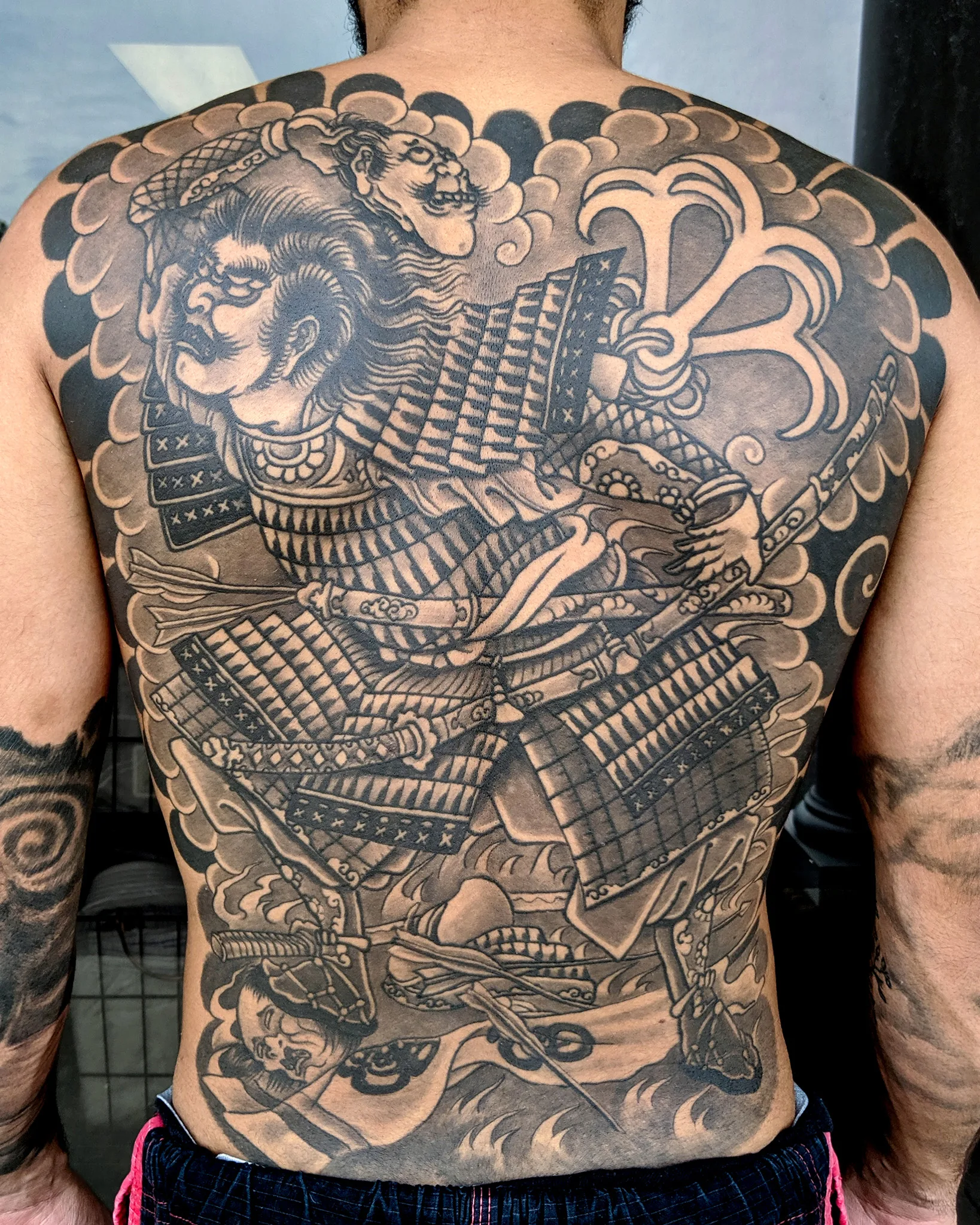
This crossover makes sense. Both traditions share core principles: bold outlines, saturated color, designs built to last. Someone who already appreciates American Traditional has an instinct for what makes Japanese work good, even if they can’t articulate the compositional rules. The foundations overlap.
I specialize in both styles specifically because this overlap is real and I see it play out constantly. A Marine who started with a devil dog bulldog on their calf and now wants a Japanese sleeve on their arm isn’t switching styles. They’re expanding within a connected tradition.
Working With Military Schedules
Military life doesn’t follow a predictable calendar. Deployments, field exercises, PCS orders, and duty rotations all affect scheduling. I’ve worked around all of it.
For multi-session projects (which most Japanese work is), I plan the session schedule knowing that dates might need to shift. If you get deployed between sessions, we pick up where we left off when you’re back. The composition is planned from the start, so there’s no question about what comes next when you return.
For personnel on short tours (2-3 years at Cherry Point or Lejeune), we can plan a project that fits within your time here. A full sleeve in 3 to 5 sessions over a few months is achievable within most tour lengths. If you PCS before the project is complete, we can schedule finishing sessions around leave or future visits.
The shop is open every day, 12 to 7, and I tattoo Wednesday through Sunday. I don’t do walk-ins for large-scale work, but the request and consultation process is straightforward. Start with a tattoo request and we’ll figure out a plan that works with your schedule.
Part of the Community
This isn’t a marketing angle. It’s more than a decade of history here. Cherry Point and Camp Lejeune personnel have been a significant part of my client base since I started working in Havelock in 2013. The Custom Tattoo Company, a second-generation family shop founded in 1983, has been part of the Eastern NC military community longer than most people in it have been alive.
If you’re stationed at Cherry Point, Camp Lejeune, or anywhere in the Eastern NC region and you’re looking for Japanese Irezumi or American Traditional work from someone who’s been doing this since before you were probably born, you know where to find me.
For booking information or to submit a request please visit the links below
Common Questions
Is there a tattoo shop near Camp Lejeune that does Japanese work?
The Custom Tattoo Company in Havelock, NC is about 45 minutes south of Camp Lejeune on US-17. I specialize in large-scale Japanese tattooing and take American Traditional by request, tattooing since 2000 with 100+ competition awards. I’ve been tattooing military personnel from Camp Lejeune since I started working in Havelock in 2013. Start with a tattoo request to begin the process.
Can I start a sleeve project if I might PCS before it’s done?
Yes. Multi-session projects are planned from the start with a full composition and session schedule. If you PCS before completing the work, we can schedule finishing sessions around leave or return visits. The design doesn’t change and the plan stays in place regardless of how long between sessions.
What’s the connection between military tattoo traditions and Japanese tattooing?
American servicemembers stationed in Japan after World War II were among the first Westerners to encounter Japanese Irezumi up close. They brought that exposure home, and American tattoo artists began incorporating Japanese techniques and subjects into their work. Both traditions share core principles (bold outlines, strong color, longevity), and the crossover between military-rooted American Traditional and Japanese Irezumi has been part of tattoo culture for decades. In Eastern NC, with Camp Lejeune and Cherry Point nearby, that connection is especially strong.
If this was useful, you can make davetedder.com a preferred source on Google. Your own search results will show this site more often.
Make davetedder.com a preferred source