Japanese Backpiece Tattoos by Dave Tedder
A Japanese backpiece tattoo with me is one subject, one background, and four to six full-day sessions planned as a whole before the first line, because the back is the largest single canvas on the body and it is where Japanese tattooing is most complete. I have been tattooing since 2000 and large-scale Japanese work is what I do. The finished backs are in the large-scale portfolio.
Work featured in International Tattoo Art, Skin & Ink, Tattoo Savage, Prick and ten more tattoo magazines, 2004 to 2014.
Rather talk it through first? Call or text me at 331-588-4848.
Dave has given me a full arm, leg, and back piece and has done a phenomenal job. Super professional but also just a really cool guy.
★★★★★ Wesley T., Google review
What a Backpiece Covers
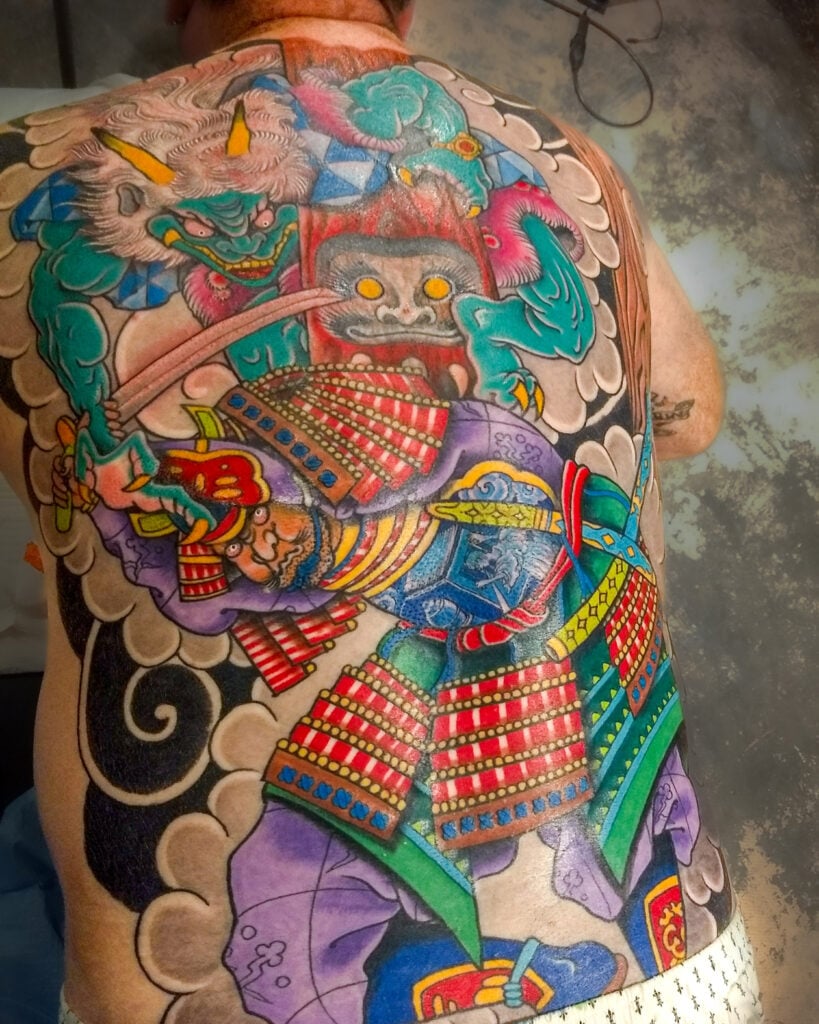
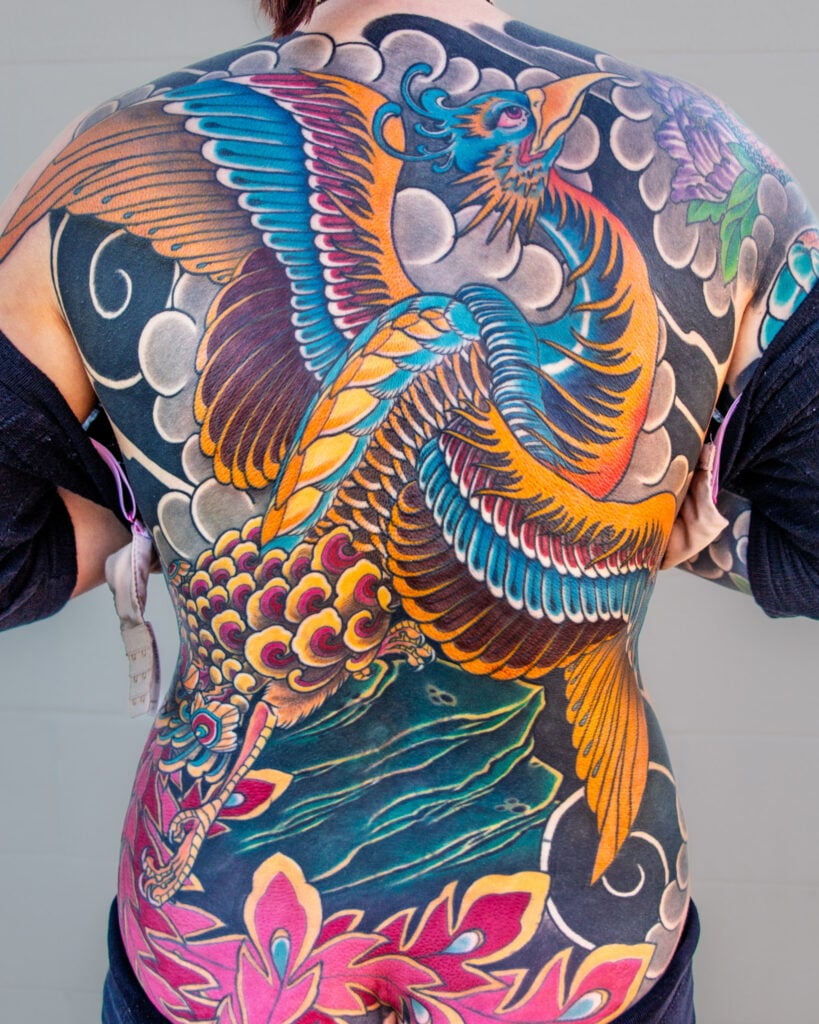
A full backpiece runs from the collar to below the beltline, shoulder to shoulder. The traditional name is kame-no-koh, turtle shell, for the shape it makes. It is the center of the Japanese body system: sleeves, chest panels and legs are all built to meet the back, and a backpiece is designed knowing that, even when nothing else is planned.
The back can extend onto the upper legs, stopping above the knee. That form is the hanzubon, short pants, and it adds two sessions and a good deal of room for the background to move. It is the difference between a back that stops at the belt and a composition that carries the whole rear of the body. Most backpieces stay at the beltline; the extension is there when the subject calls for it.
One Subject, Full Size

A backpiece carries one main subject at a scale nowhere else on the body allows. A dragon can be drawn full length. A phoenix can open its wings across both shoulders. A warrior can be shown at the size of the woodblock prints the tradition comes from, with the action of the scene filling the back. The subject is chosen first, then the background that belongs with it: water for a koi or a dragon, clouds or wind for a phoenix or a deity, and the background is what makes the piece read as one image from across a room.
Figure work is where I spend a lot of my effort. Samurai, warrior monks, oni and the heroes of the Suikoden are long-standing backpiece subjects, and drawing them properly means drawing them in the manner of the prints they come from, not as a modern illustration placed on skin. Dragons and tigers are the other subjects I am asked for most, and the meanings index covers the range.
How a Backpiece Is Built
The outline session is the longest single sitting of any project I do, because the entire composition goes on at once so that every element is placed in relation to every other. The background follows over one or two sessions. The foreground, the subject itself, takes the last two or three. Sessions are spaced three to four weeks apart for healing, which usually puts a backpiece at four to eight months from first session to last.
The drawing is done to your back specifically, around the shoulder blades and the spine and the way the back moves when you stand and turn. A backpiece that is drawn flat and stretched on looks wrong the first time the client raises an arm.
What a Japanese Backpiece Costs
A full backpiece at my studio in Havelock, North Carolina runs $4,000 to $6,000 over four to six sessions. With the extension onto the upper legs it runs $6,000 to $8,000 over six to eight. A $300 deposit holds the project and starts the drawing, and you pay per session as the work is done. You get a straight estimate of session count and total at the consultation. The whole price guide is public.
Lauren, Dave, and the rest of the staff are top notch. If you’re looking for quality work at amazing prices, this is the place! You won’t find a more inviting atmosphere, or a cleaner shop anywhere in town.
★★★★★ Braxton B., Google review
Where the Work Happens and How to Start
I work at The Custom Tattoo Company in Havelock, North Carolina, and I hold regular residency dates at Electro Magnetic Tattoo in Chesapeake, Virginia for Hampton Roads clients. Current dates are on the travel page. Japanese work gets priority booking.
Send a tattoo request with the subject you are drawn to and whether the back alone or the extension onto the legs is what you have in mind. I follow up, we talk it through, and the consultation is in person for local clients or by phone or video for anyone traveling in. What a consultation looks like is written up separately.
- One drawing made for you, so the whole piece reads as one composition, not a set of separate tattoos.
- A session plan set before we start, built around your schedule.
- Your per-session price and a realistic session count before the first appointment.
I’ve never felt more comfortable sitting with a tattoo artist. They take the time to listen, make sure you’re totally at ease, and deliver phenomenal results every single time.
★★★★★ Tiana W., Google review
Rather talk it through first? Call or text me at 331-588-4848.
Common Questions
How many sessions does a Japanese backpiece take?
Usually 4 to 6 full-day sessions for the back alone, collar to below the beltline. Extending it onto the upper legs, the hanzubon form, runs 6 to 8 sessions total. The outline session is the longest single sitting of any project I do.
How much does a Japanese backpiece cost?
A full backpiece runs $4,000 to $6,000 at my studio in Havelock, North Carolina. With the extension onto the upper legs it runs $6,000 to $8,000. A $300 deposit holds the project and you pay per session. The full price guide is public.
Does a backpiece commit me to a bodysuit?
No. A backpiece is complete on its own and most of the ones I have done stay that way. If a bodysuit is a possibility, say so at the consultation, because the back is the center of a suit and it is designed differently when the sleeves and legs are going to meet it.
How long does a backpiece take from start to finish?
Four to six sessions spaced 3 to 4 weeks apart usually lands between four and eight months. The pace is set by healing and by your schedule. A project that keeps its rhythm finishes on time; one that stalls between sessions pushes the finish out.
Other large-scale projects: Japanese sleeve, Japanese leg sleeve and Japanese bodysuit. All four are described on the Japanese tattoos page, and the finished work is in the large-scale portfolio.